

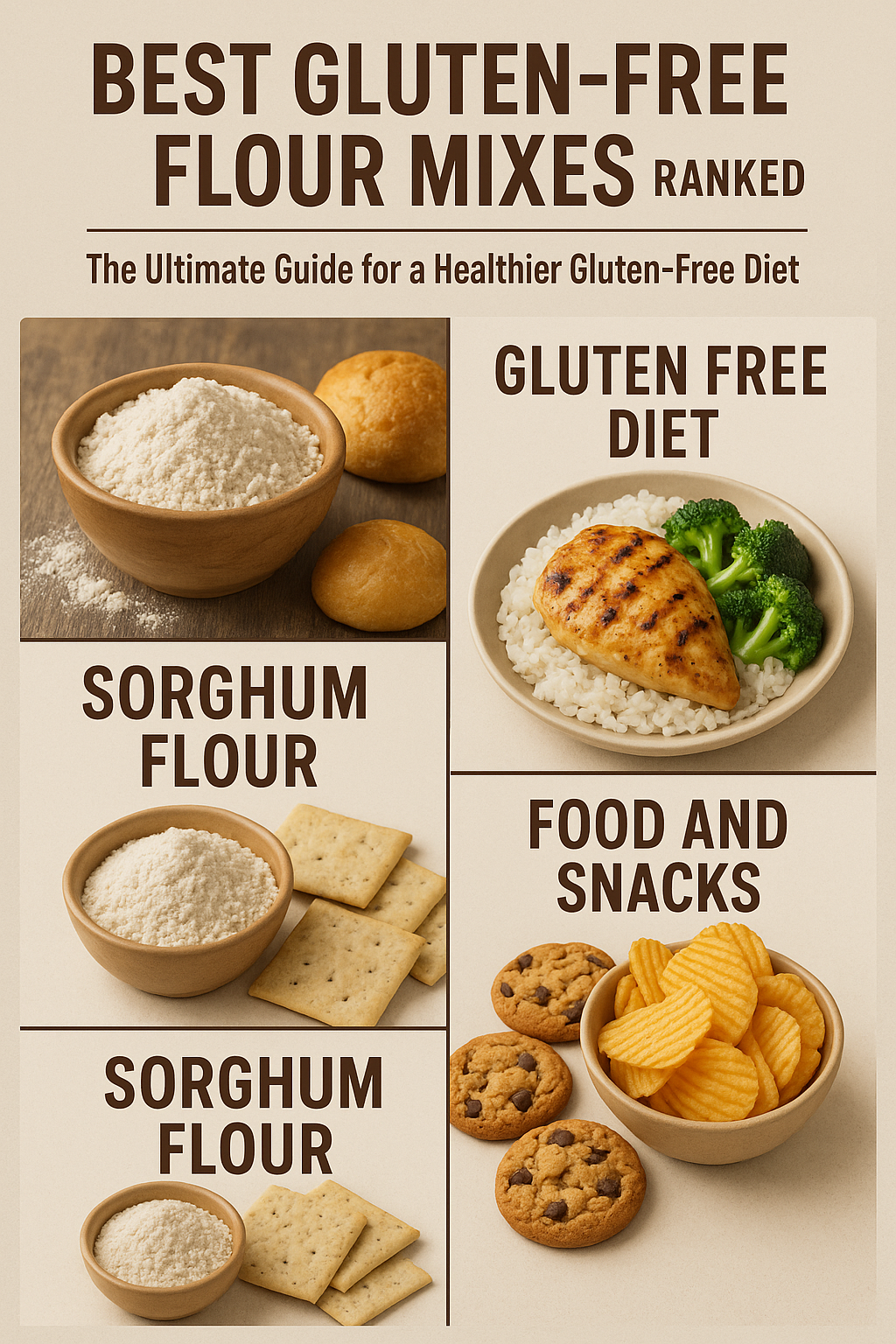
Gluten free food: You are not the only one to have changed your diet into gluten free one recently. As awareness of the presence of celiac disease, gluten sensitivity, and even a more general move toward eating healthier rises, individuals are turning to gluten free food and snacks in large numbers now as never before. Yet, at first, becoming gluten free would seem a piece of cake: one only needs to remove wheat, barley, and rye. However, the task is not as straightforward as one might think: it is easy to get lost.
Today in the blog we will reveal the most popular errors done by people on the gluten free diet, decode reasons why it occurs and give hints on how to overcome it. On the way, we shall take some of the smart decisions like switching to sorghum flour and need to balance your meals, so you actually enjoy your gluten free experience.
Why Go Gluten Free Food?
Now that we have covered an introduction to the slip-ups, it is only fair that we briefly think of why so many people resort to gluten free diet in the first place.
Individuals having the celiac disease are sensitive to even minute quantities of gluten, which destroy the small intestine causing pain, malabsorption and chronic health problems.
Non-celiac gluten sensitive people are less likely to be damaged by the gluten in their intestine, yet they might still feel bloated, tired or headachy after having consumed gluten.
Others, it is just that they do not feel sluggish or do not have digestive problems as much without gluten.
However, the problem is that although by eliminating gluten you may lessen the symptoms, this does not necessarily mean that you have started eating better. Millions of people fall into the trap of making mistakes that lead to nutritional deficiencies, gastrointestinal problems, or stress in plain words. The easiest way to address these pitfalls is to give them directly.
Mistake #1: Thinking “Gluten Free Food” Is Always Healthy
There is a lot to be said about it being one of the greatest myths that is circulating around: it is gluten free so it must be healthy. Unfortunately, it is not the case.
Take a stroll down the aisles of any grocery store and you will meet shelves upon shelves of gluten free cookies, muffins, pizza bases and snacks among others. However these may be exceptionally processed and may contain loads of sugar, salt and poor quality fats to reimburse the loss of texture and taste with the deletion of gluten.
Therefore, even though they are technically gluten free food, they are usually not rich in nutrients or conducive to your long term health.
What one should rather do:
- Centre your attention on naturally gluten free whole foods such as vegetables, fruits, lean meats, legumes, eggs, nuts, seeds, rice, quinoa and sweet potatoes.
- Bake with whole grain gluten free flour such as sorghum flour, buckwheat or millet.
- It does not mean one should have gluten free foods every day, as a treat.
Mistake #2: Not Checking Labels Carefully
Most individuals who are new in gluten free diet believe that as long as the food does not jail like bread or pasta, it is safe. Sadly, gluten lurks where you would not expect it.
Some examples?
- In soy, wheat is frequently used.
- Wheat may be used as a thickener in spicate blends, salad dressings and marinades.
- Even certain ice creams or flavor yogurts contain some gluten.
The other issue is that of cross-contamination. Grains such as oats are naturally gluten free but they are frequently refined in the same facility that contain wheat.
What one should rather do:
- You should always read the entire list of ingredients even when you have purchased it earlier. Manufacturers will be able to alter recipes.
- Check the labels to see certified gluten free labels particularly on grains such as oars.
- Order out and ask questions to confirm or alter a meal – most chefs will oblige to doing this.
Mistake #3: Ignoring Fiber In Gluten Free Diet
When people change their intakes of the bread and cereals to gluten free ones, they sometimes experience digestive problems (paradoxically, more bloating or constipation). Why? Since a good number of gluten free products are made possible with the use of refined rice flour or low fiber starch.
A healthy gut, blood sugar and satiety also depends on fiber. Through lack of, you can also experience cravings.
Better approach:
Mistake #4: Following Only Packed Gluten Free Food, Snacks
One can be tempted to rely so much on the convenience of the gluten free ready made food. Who does not want to take a box of crackers or Frozen gluten free pizza to their cart after all? However, when the nutrition of what you eat consists mostly of boxed and bagged food, you are not getting the important nutrients you need.
Moreover, most of these products are costlier and may make you get hungry soon.
Smart strategy:
- Where possible prepare gluten free meals. A basic rice dish with vegetables and roasted chicken takes some minutes.
- You can bake muffins or bread out of sorghum flour and almond flour blended with tapioca to make it healthier.
- Have some whole food snack storage- ready to go items such as carrot sticks with hummus or roasted chickpeas or apple slices with peanut butt
Mistake #5: Lack of Enough Variety
When an individual switches to go gluten free, in the beginning he/she may use gluten free bread instead of wheat bread, gluten free paste instead of wheat pasta, gluten free cookies instead of wheat cookies. Even then it is a narrow diet that is just replaced with another ingredient.
In the absence of variety, there is a risk of lacking such vitamins and minerals as iron, vitamins of the B group, and zinc.
The way to add spice:
- Experiment with other grains-other than rice, think of experimenting with quinoa, buckwheat, amaranth and sorghum flour flatbreads.
- Substitute proteins: chicken, fish, eggs, tofu, lentil and yogurt.
- Switch your veggies on a weekly basis. A Rainbow of nutrients is the same as rainbow plates.
Mistake #6: ignoring the hidden stress
There is another typical pitfall not only medical but also emotional. beginning a gluten free diet becomes intimidating. Reading labels, checking the food for contamination, or missing out on parties at parties all costs something.
Others get nervous so much to the level that they cannot attend social occasions, or they become overly phobic towards food. It particularly holds true when their physician did not make it clear as to what is required as opposed to a case of overkill.
Advice on how to get balanced:
- Keep in mind: in case you have celiac, avoidance becomes very critical. However, when you are merely gluten sensitive, there will be no intestinal damage even in the case of the tiniest amounts of gluten.
- Make rooms to communicate with friends and family members to make them understand your needs.
- Think about how many delicious gluten free tasting meals you can eat. Love food and avoid fear of it.
Mistake #7: Neglecting Nutritional Supplements at times they are required.
The problem is that some individuals who eat gluten-free cease to consume the right amount of nutrients prevalent in enriched wheat products, such as folate, iron, and B12. In the long run, this may cause deficiencies.
Best practice:
- Do your doctor to check your levels.
- Pay attention to healthy substances (leafy green, eggs, beans, nuts, seeds).
- In case it is suggested, then high-quality supplements should be used to make up the gaps.
Mistake# 8: Failure to Use different Flours Such as Sorghum Flour
The staples of a gluten free pantry are rice flour or corn starch that may lack protein and also fiber. It is a game changer to incorporate sorghum flour. It is creamy, low-fat, and helps complement protein, antioxidants, and fiber-friendly food in the diet.
Quick ideas:
- In pancakes, mix sorghum flour and almond flour, or coconut flour.
- Apply to food and snacks such as muffins or savoury crepes.
- Give sorghum porridge a full breakfast.
Mistake #9: Skipping Meal Plans on gluten free diet
It is a general rule that those who do not plan anything, will simply end up taking what is convenient. In this case when you are on a gluten free diet – that can easily translate into boring food stuffs or monotony.
The way to repair it:
- Write down some meal ideas during a 10-minutes session per week.
- Pre cook grains that are gluten free in batches, and roast veggies to assemble quickly.
- Have ready-made emergency food at hand such as canned beans or frozen vegetables.
Mistake #10: Assuming Gluten Free Means Low Calorie or Weight Loss Friendly
Hundreds of people change to a gluten free diet in order to lose weight. However, Gluten free cookies contain the same number (or maybe even more) calories than normal cookies, and bread can be more calorie-dense- Gluten free.
The result? The opposite of weight loss, i.e. weight gain.
Smarter approach:
- watch out the portions and ingredients, more than the labeling gluten free.
- Pile your dish with vegetables and proteins that are low-fat.
- Extract healthy fats such as olive oil and avocado and treat gluten free desserts as a treat.
The Step By Step Way To Create an Effective Gluten Free Lifestyle
By now we have learned what the usual pitfalls are so to round off on a positive note here is my blueprint to a healthy, balanced gluten free diet.
✅Half of your plate should be covered by vegetables.
Gluten free, they are naturally rich in vitamins, minerals and also antioxidant.
✅Select complete gluten free grains.
Brown rice, quinoa, millet, teff, amaranth, buckwheat and yes, sorghum flour, are fabulous.
✅Macros-balance.
Combine carbs with protein (chicken, fish, tofu, lentils) and healthy fats (nuts, seeds and olive oil) so you feel full and not hungry.
✅Keep well hydrated.
It assists indigestion and promotes a healthy gut.
✅Continue the learning.
It is an art to make gluten free cooking. Find different recipes, create some spice combinations, and enjoy it.
Third ideals: A Great Way to Enjoy the Delight of Gluten Free Diet and Snacks
Being gluten free need not be sacrilege. Rather than falling into these typical traps, make meals that are made out of entire, tasty foods, and your gluten free diet would be as great (and healthier) as the regular one.
Use new grains, have fun with colorful veggies and enjoy naturally gluten free food and snacks. It can be a rich stew enriched with sorghum flour, a bright quinoa salad or a domestic treat, which will be made out of almond and coconut flour, but you have no limits.
But the paramount thing is to be kind to yourself. You are being taught how to feed your body differently and this means patience and pride. To good health.. gluten-free and gluten-free!
